Delays, however, are still possible, because the software is currently “running behind.”
The importance of software to the project lies in the ability of Siri to trigger app-specific actions from voice commands alone. When wearing the glasses the user can issue a command to buy coffee (activating an action in the Starbucks app) or call a cab (in the Uber app) or book a restaurant reservation (in OpenTable). The product will rely on such interactions, and they still aren’t ready. But they’re close.
As Gurman explains, Siri AI has just gained a new AI-supported ability to agentically handle app-specific commands; this is part of the iOS 27.3 update, which is currently in beta and will likely roll out to the public in December. Now that developers have their hands on this upgrade they can build integrations for their own apps, which is nice for iPhone users, but will be absolutely vital for the success of Apple’s smart glasses.
There will be functions based on Apple’s own software, of course, such as Messages, Maps, and Visual Intelligence. But a product needs a deep third-party software ecosystem to become truly useful.
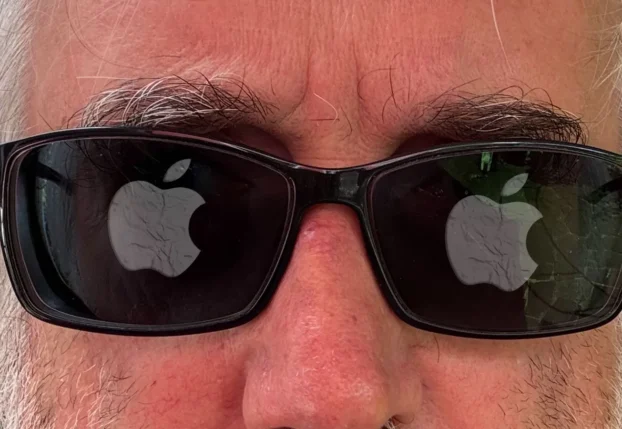
Software may be the key, but hardware will also be important to the device’s customer appeal. And here the glasses (which have frequently been referred to as Apple Glass, but are known internally as N50) may have more difficulty differentiating themselves from rival products. While the company has plans for “in-house-designed hardware, several style and color options, high-quality materials, additional sensors, and superior audio technology,” Gurman concedes that the overall presentation won’t differ very much from what Meta has offered for years or what Google is rolling out now.
“In terms of industrial design,” he writes, “internal prototypes are slightly thinner than Meta’s 2nd-generation Ray-Ban glasses. At least on some test units, the cameras are housed in oval-shaped openings that sit flush with the frame-rather than protruding from it. There’s also a light on the front that shows when the glasses are in use or charging.”
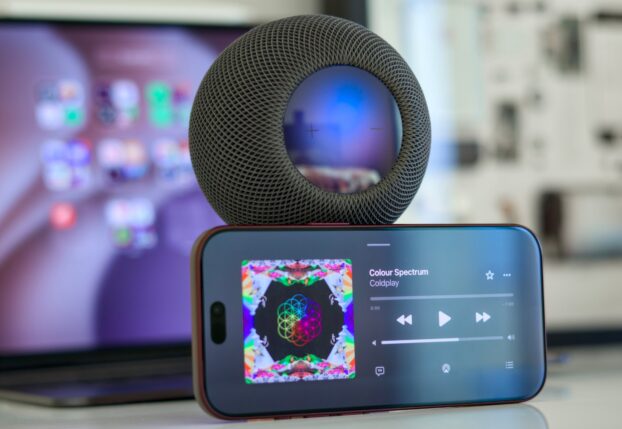
The audio at least should be premium-quality, and Apple may hope to set itself apart in this department, much as it attempted with the HomePod smart speakers. On the glasses the audio setup will support phone calls, music playback and FaceTime audio. Gurman names the charging system as another highlight, based on a proprietary (oh dear) magnetic connector near the tip of one arm. It will actually be possible to wear the glasses and charge them at the same time, he reports.
What won’t be possible is to superimpose digital imagery over the user’s surroundings in the augmented-reality (AR) style. AR may be added in a future iteration but for the first generation, the glasses will deliver a more limited feature set. Gurman says this is why the product has internally been dubbed “AirPods for the face.” Many of the glasses’ capabilities will also be possible with a recent set of AirPods (particularly the upcoming camera-equipped models), albeit with weaker battery life and fewer sensors.
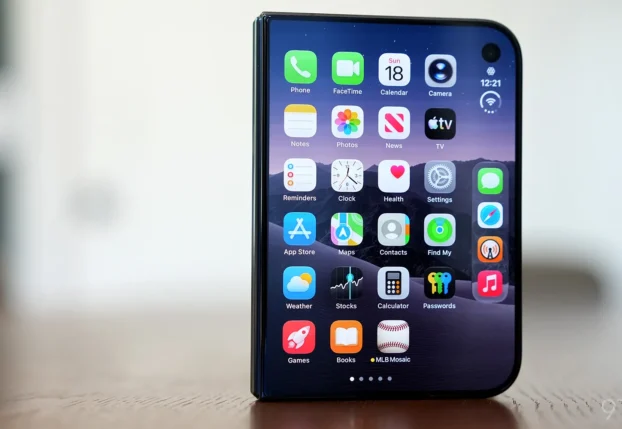
Apple is obviously close to unveiling its entry to yet another new market, following the iPhone Duo, HomeView, and touchscreen MacBook. Indeed the product’s existence was apparently revealed by a supplier last week. But the company wants to get everything in place for a smooth launch, so we’ll have to hang on just a little longer.